


Dupe culture is our modern moral paradox. It supposedly democratizes taste for those without means — and simultaneously undercuts the livelihood of the people who created that taste in the first place.
Of course, dupe culture isn’t new; surely ancient in origin, or at least as old as the concept of the socioeconomic class itself. But for the past 15 years or so, the internet has fueled the knockoff industry at the speed of a 5-Hour Energy chased with a Four Loko.
Around the same time that dupes went mainstream, another design movement emerged: the mass millennialization of common objects. Think humidifiers, shower heads, toilet plungers, tool kits — all redesigned to be smoother, softer, more “aesthetic,” and more palatable to a generation allergic to ugliness. These products weren’t literal copies of high design; they were sanitized versions of the ordinary. Their purpose wasn’t to imitate luxury, but to conceal utility. And most didn’t carry luxury price tags — just a modest 10–20% markup for their blush-colored optimism.
Now, though, I sense a new rebellion — what I’d call the “reverse dupe”: taking everyday objects and elevating them to luxury (or artistic) status. The point isn’t to disguise the function, but to spotlight it.
I’m not saying this is a mass trend, just something that makes me wonder…why now?
It’s clear we’ve been overexposed to product design on the Glossier scale. Perfection is so oversaturated that perhaps we’re looking for pleasure in objects that feel a little absurd. A marble Squatty Potty? A $1,200 cheese grater? When the leader of the free world posts a video of him showering his own citizens in shit — it’s a pretty good sign that nothing makes sense right now.
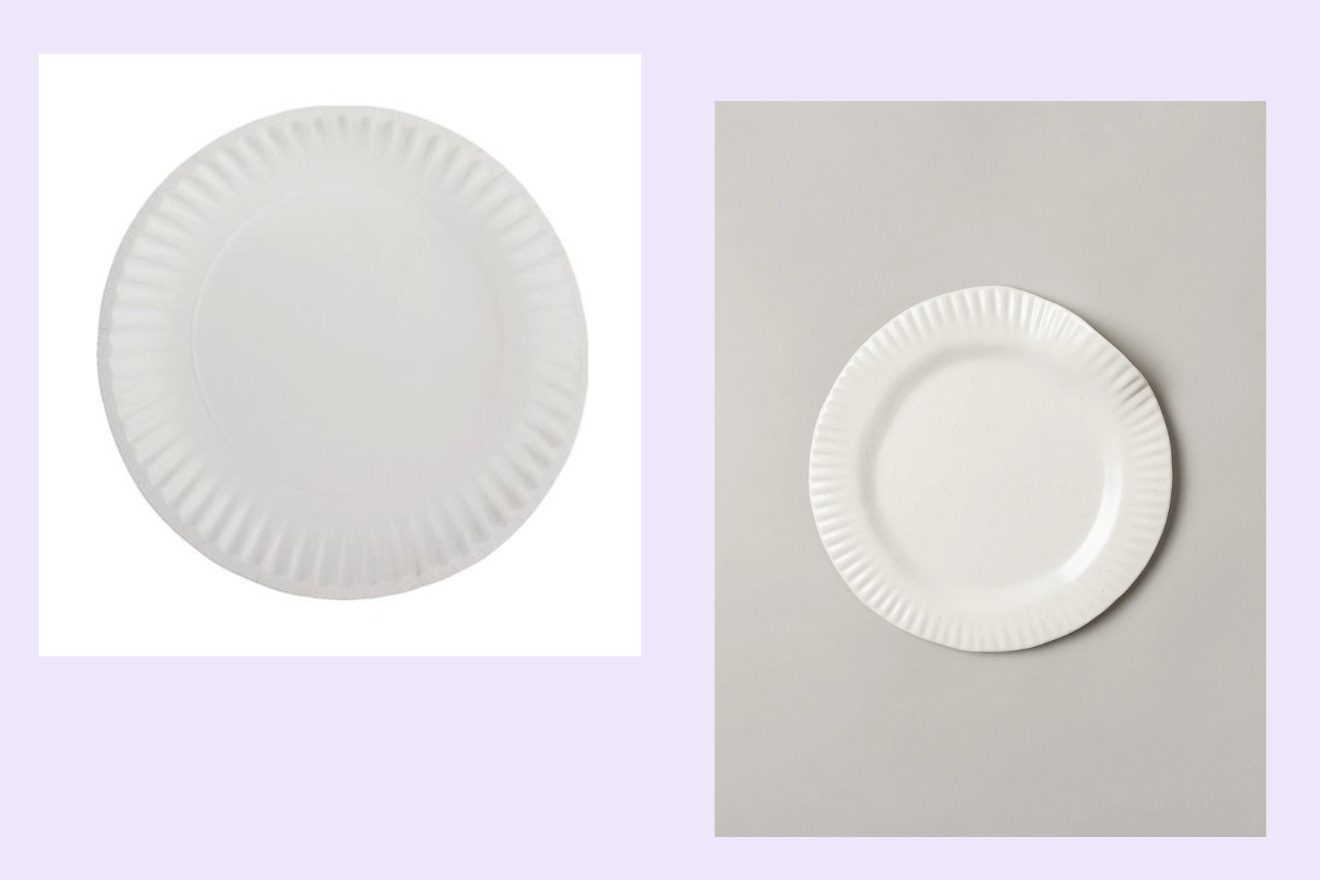
All jokes aside, I see no better example of an artful reverse dupe than Virginia Sin’s Porcelain Paper Plate ($98). Earlier this month, Sin gathered a small crowd (myself included) to celebrate the relaunch of this plate, where she told us that the piece pays tribute to her family’s tradition of cooking an elaborate Sunday meal, only to serve it on flimsy paper plates.
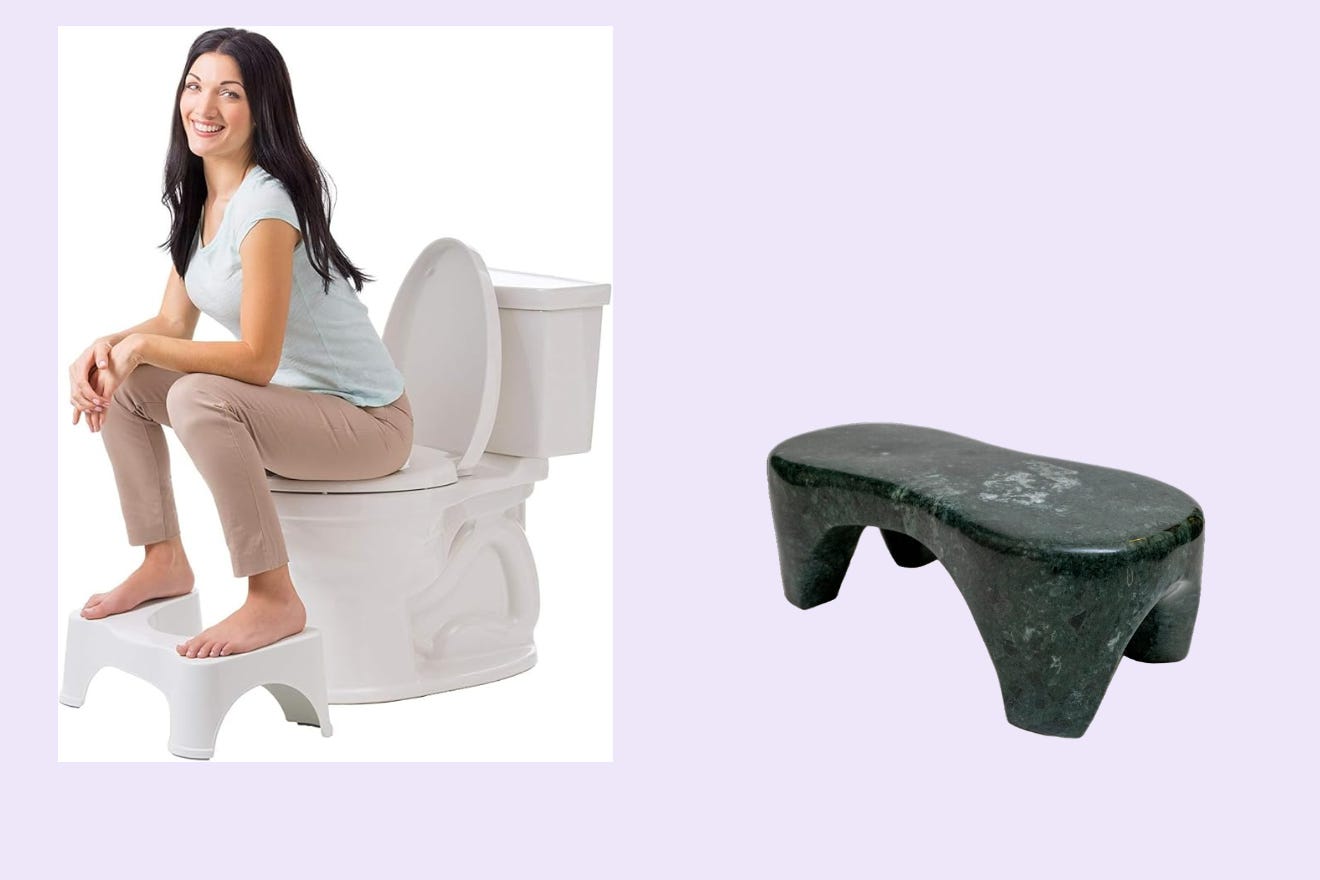
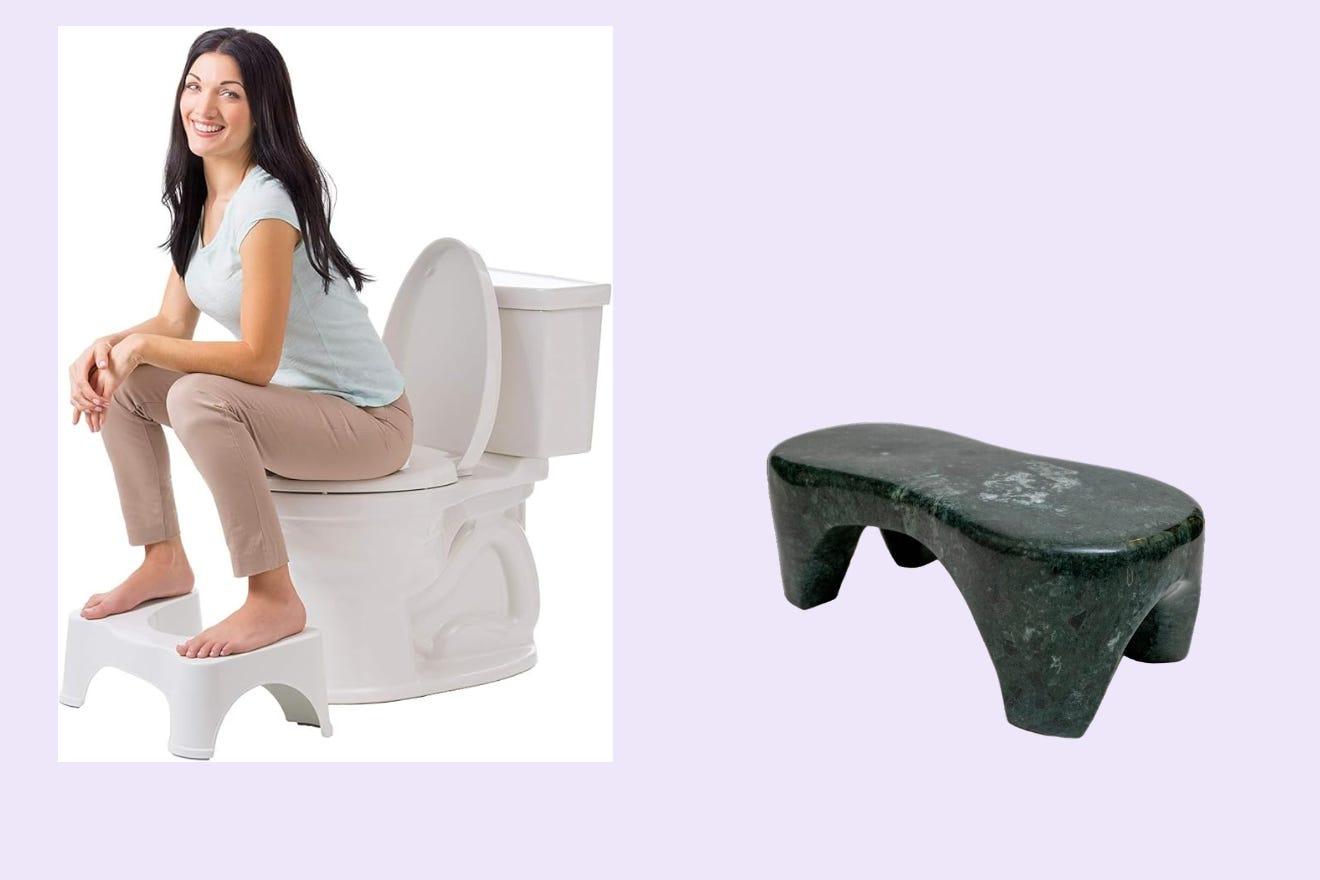
And then there’s Anastasio Home’s solid marble toilet stool. Although the company takes good care — in wording and design — to avoid trademark issues with the Squatty Potty, it serves the same function. Instead this product is called The Throne Adjacent, retailing at $575.
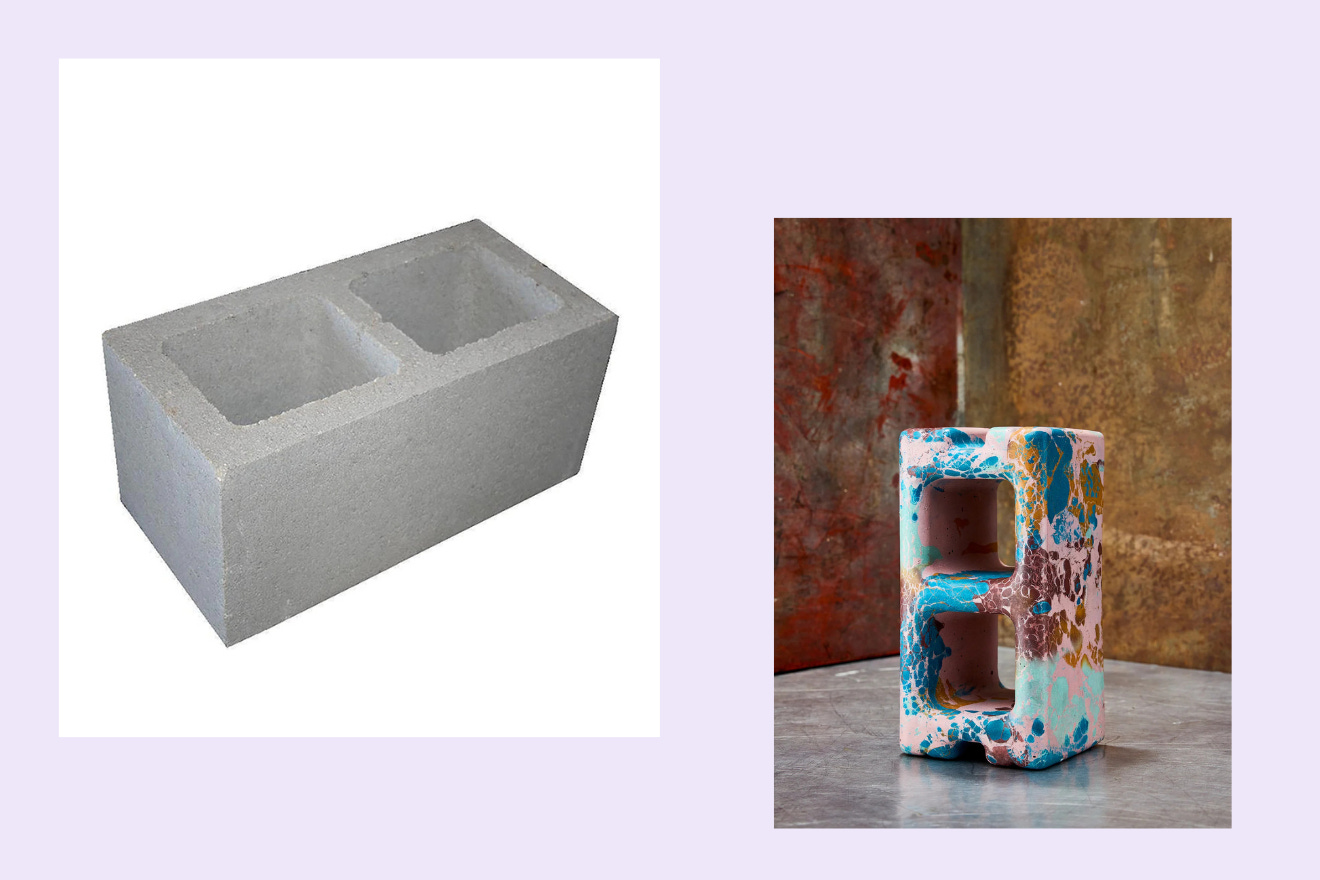
An oldie but a goodie is Concrete Cat’s cinder block unit, a staple of the LES homegoods shop Coming Soon. This is clearly intended as a design object, although it’s still made of concrete, so you could supposedly recreate the cinder block bookshelves of your college youth. But it would just cost you a semester’s worth of housing, considering each unit is over $1,000.
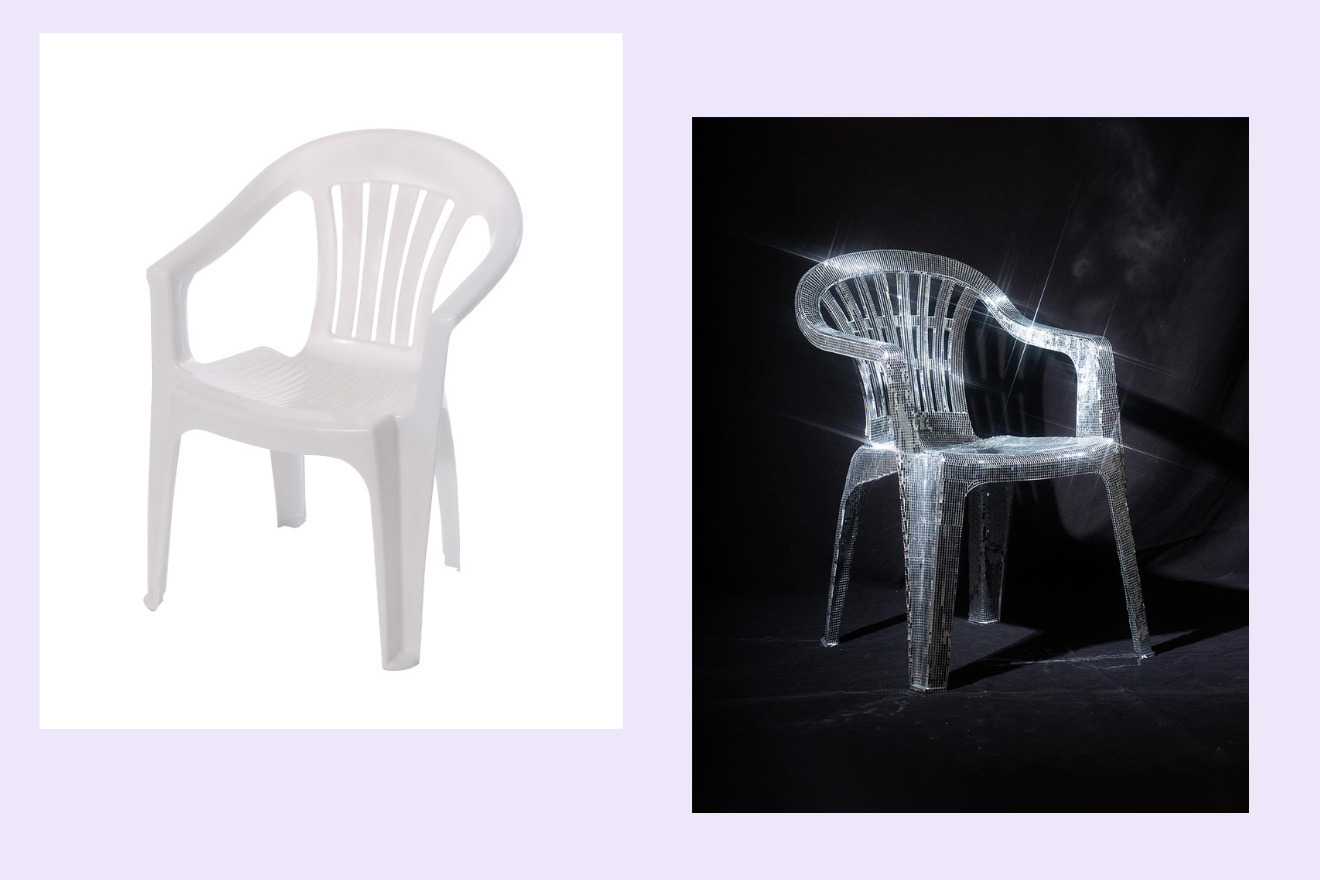
You can’t actually buy HFA-Studio’s reconceptualization of a classic Monobloc chair aka plastic lawn chair. In their own words (translated from German): “The Glitter Monobloc, created through weeks of meticulous handcrafting, transforms the ubiquitous ‘Monobloc Chair’ from the epitome of affordable holiday and garden furniture into a sparkling art object.” Considering you can buy an unadorned plastic chair from Alibaba for $4.13, the glitter version is an ostensible step up.
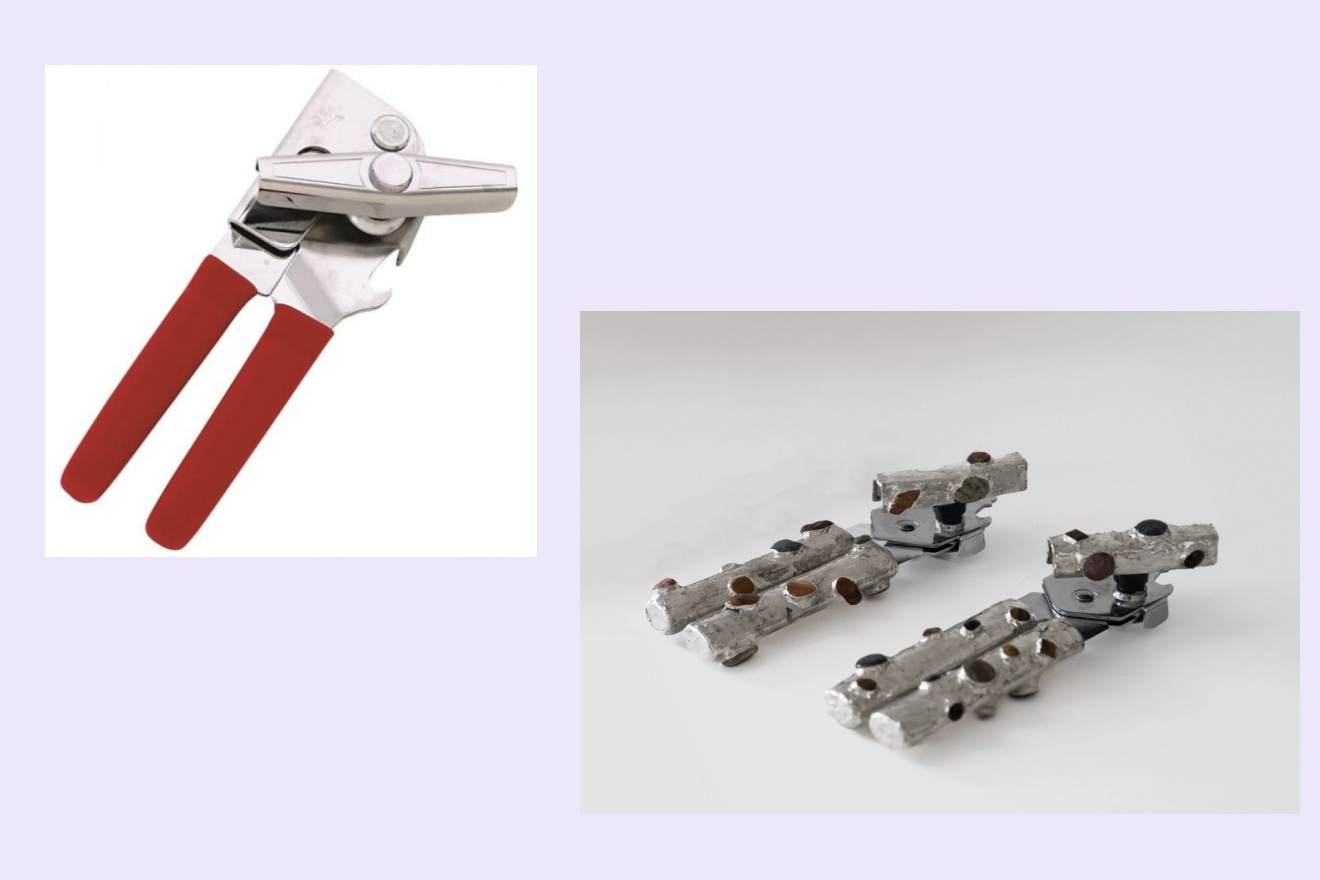
I am a huge fan of The Perfect Nothing Catalog collection, designed by Frank Traynor, a lovely man without pretense. The PNC takes an unabashed and sorry-not-sorry approach to recasting basic household items — can openers, dust pans, hose nozzles — as status symbol. What’s more brazen than taking a Boden French press, covering it in stones of middling value, and selling it for $1,500? Nothing, especially considering my husband breaks one of these approximately every 1.5 years.
Please, sound off in the comments about your favorite dupes — reverse or regular!
THE TIFFANY STERLING SILVER TIN CAN; ONE THOUSAND AMERICAN DOLLARS
"Dupe culture is our modern moral paradox. It supposedly democratizes taste for those without means — and simultaneously undercuts the livelihood of the people who created that taste in the first place." - perfectly put