


Let’s talk TRENDS aka SCHMENDS.


(Clockwise: Hal Haines; Rodolphe Parente; Yannick Aaron M.; And And And)
I can’t remember who wrote about this not too long ago, but they hit the proverbial nail on the head: Those end-of-year design trend stories you see in all the major pubs are not, um, real? Okay, that’s a pretty sweeping accusation, so I don’t want to say that there’s no truth in them, but here are my thoughts:
A lot of these stories are mis-engineered because all end-of-year content is predetermined so people can actually take vacation, and trends fit into the schema. They perform well on social and news feeds. And we feel pressured to say that the year we’re leaving behind was DIFFERENT. Even if it wasn’t so different. Or the differences were just very subtle and now we need quotes to back this up so that we can satisfy our bosses/SEO managers who want a certain number of articles with the word “trend” in the headline.
But the real issue for me is that real-world decor doesn’t function like fashion; the changes are slower. You don’t buy a new decor thing every month. This stuff is expensive and/or onerous. People don’t paint rooms once a year. They don’t purchase a new living room rug on a whim. They also don’t change up their countertops just because. And just because green kitchens were in in 2022 doesn’t mean they are out for 2024. In decor, I think it’s hard to say definitively that something is “out of style” or that a “new” look is genuinely “new.” Social media can make it feel like there’s a massive sea change in style, but we have to remember that this is largely based on designer projects (i.e. a minuscule percentage of the world). Further complicating things is that those projects are fairly coastal — not representative of all locales. That said: I SO respect those designers for their innovative ideas that inspire and feed me…but don’t necessarily reflect my reality.
In an ideal world, I’d re-term “trends” to “observations.” So, as a so-called “design editor” (although I don’t know if I can call myself that after being laid off), here’s what I picked up over the course of 2023. I can’t say for sure whether these things are signs of “trends for 2024” because no one knows the future. (By the way, I love all of these.)
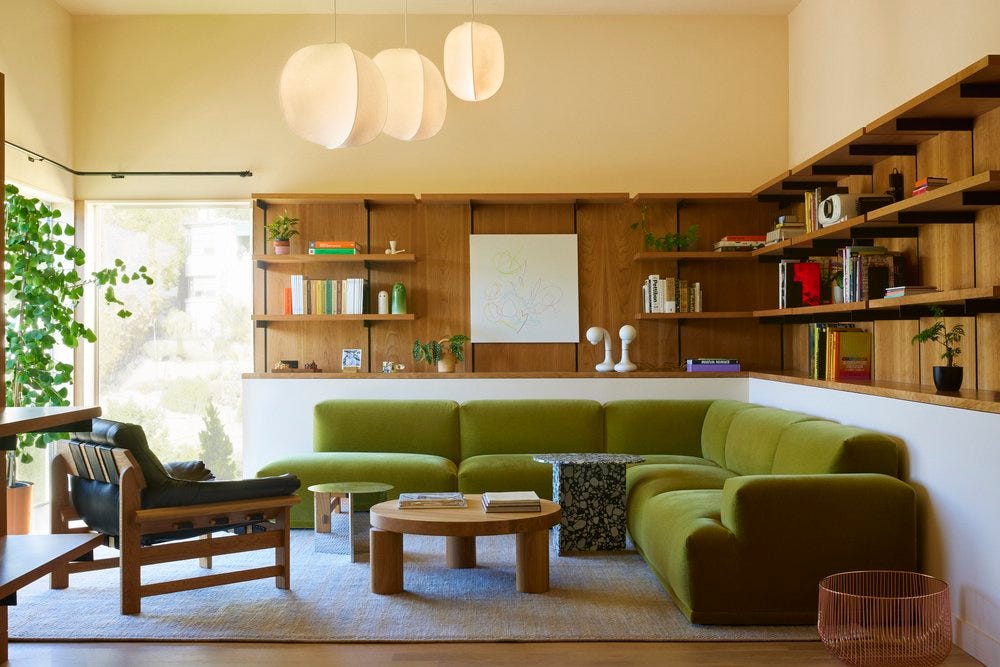
Something I started calling “soft midcentury.” In the 2010s, and the years leading up, we saw homes really leaning into midcentury — let’s call that a full-on midmod boner — and that now feels camp. Softy/or half-chub midcentury is a reinterpretation of a midcentury framework, and incorporating actual midcentury accents, but with a younger, less serious vibe.
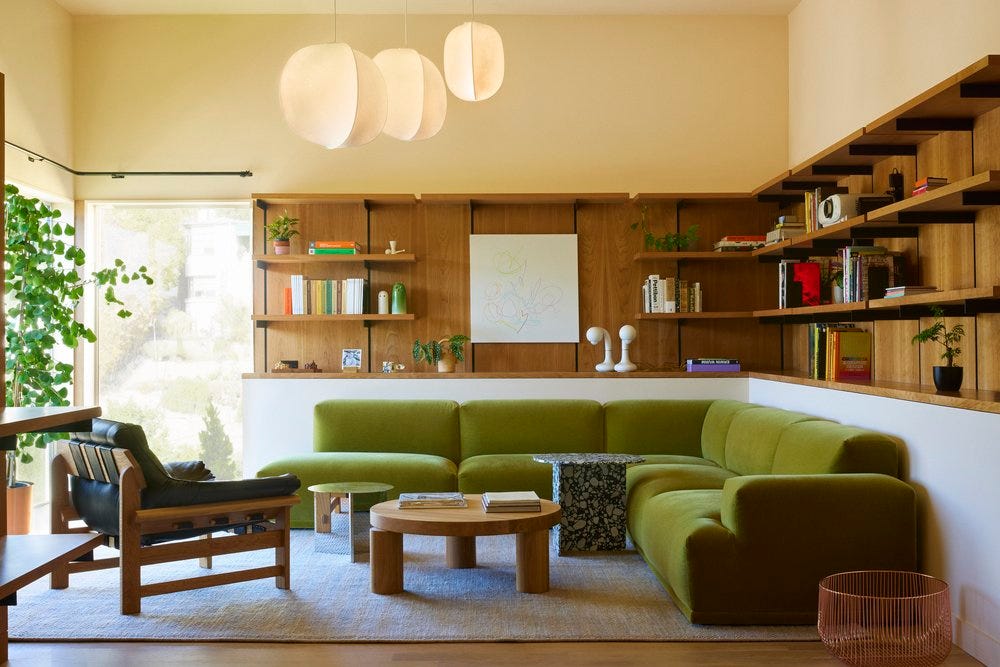
(Living room designed by the brilliant L.A.-based firm, And And And)
Folks wanting “meaning” in their surroundings. Nothing new here. Why wouldn’t you want a home that means something? But pretty much everyone we interviewed for home tours said that they tried to find pieces that “resonated” with them or contained memories. I heard the word “intentional” a lot. Seems like the older Gen Zs and millennials are just taking things slower when creating their worlds as opposed to Amazoning or IKEAing everything.
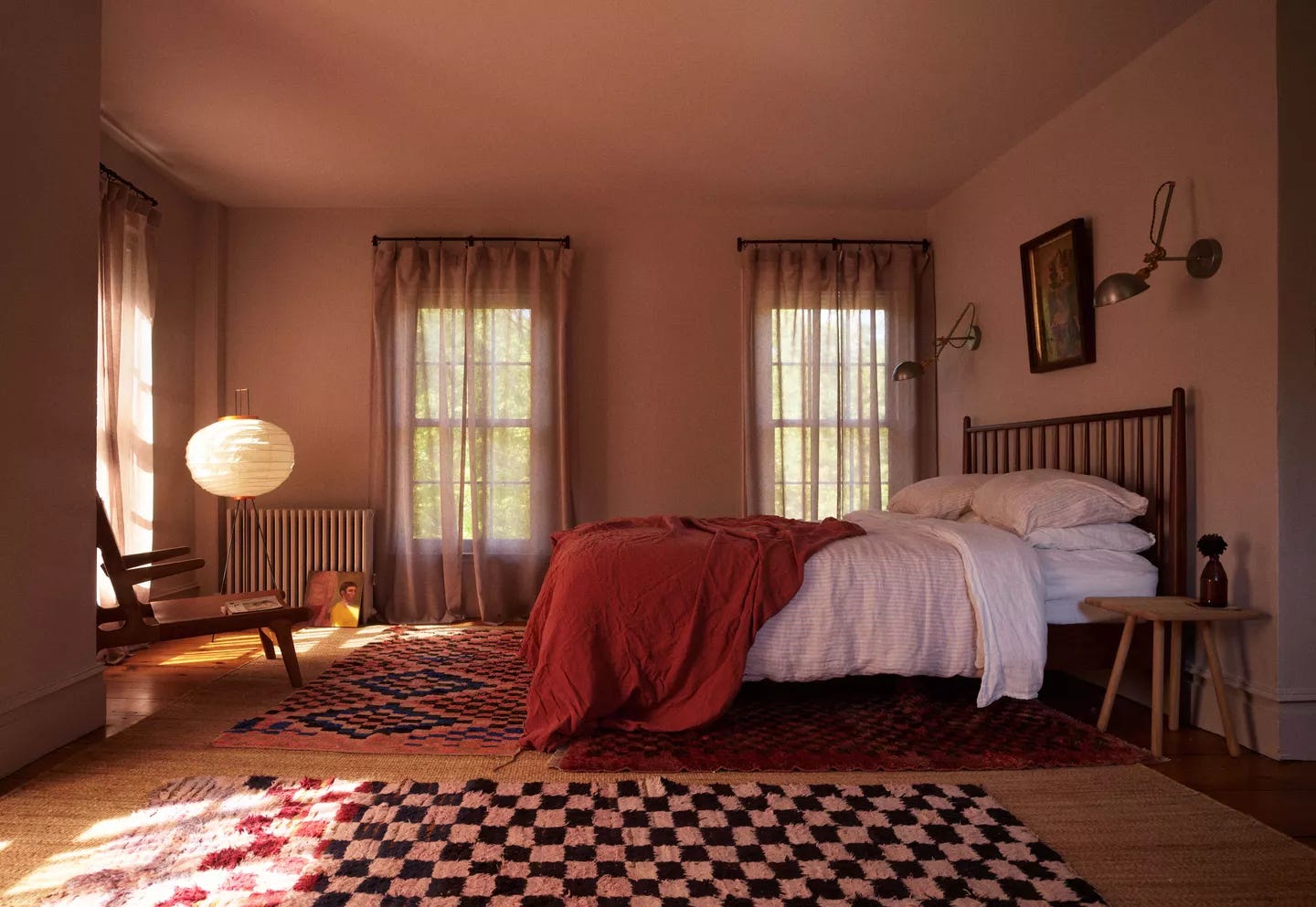
White lanterns. Again. NOT NEW. Just seeming to find more exposure and footing than in past years. Noguchi never goes out of style. But wow did we see a lot of Noguchi.
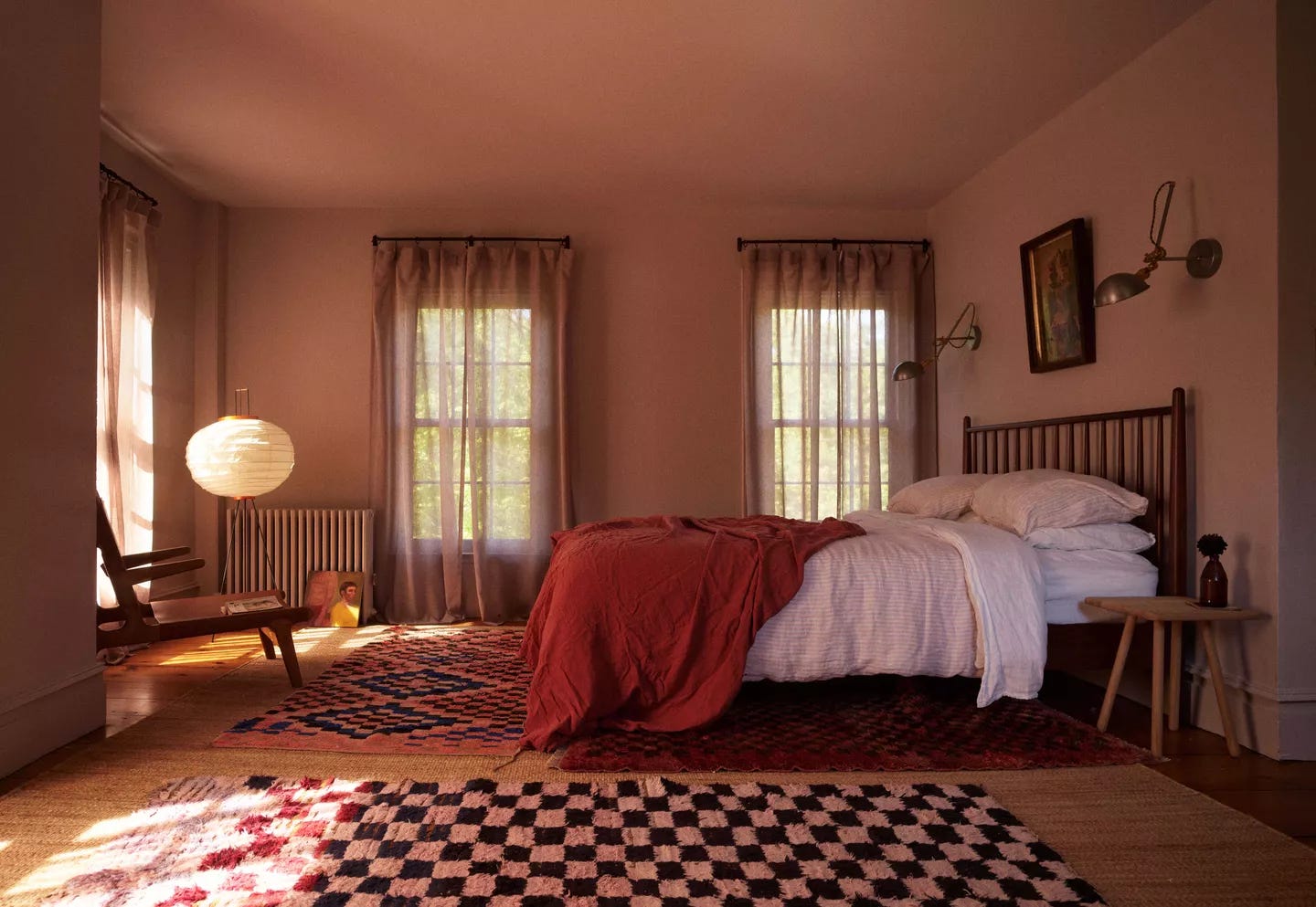
(A Hudson, NY project by Arthur’s that we featured on Hunker)
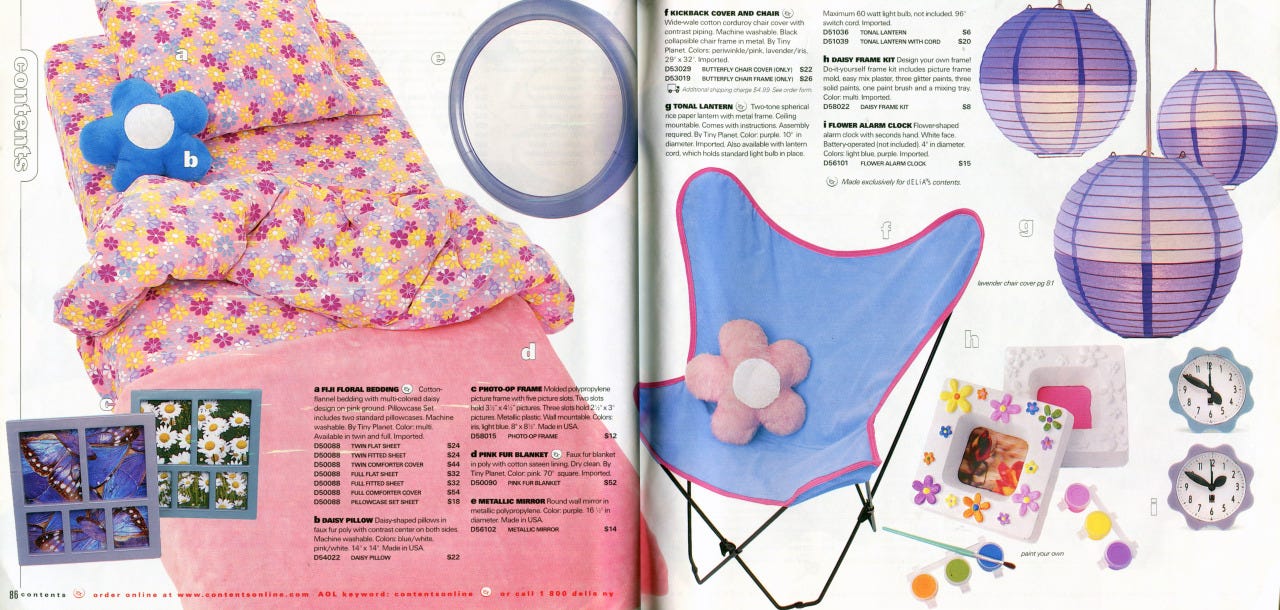
The reason the lanterns caught on is in the ease. They’re inexpensive and can instantly make a room feel “design” especially in minimalist contexts, but really in any context. We sure have come a long way from the ‘90s, which was the last time I owned a lantern. Behold this page of the Delia*s 1999 holiday catalog:
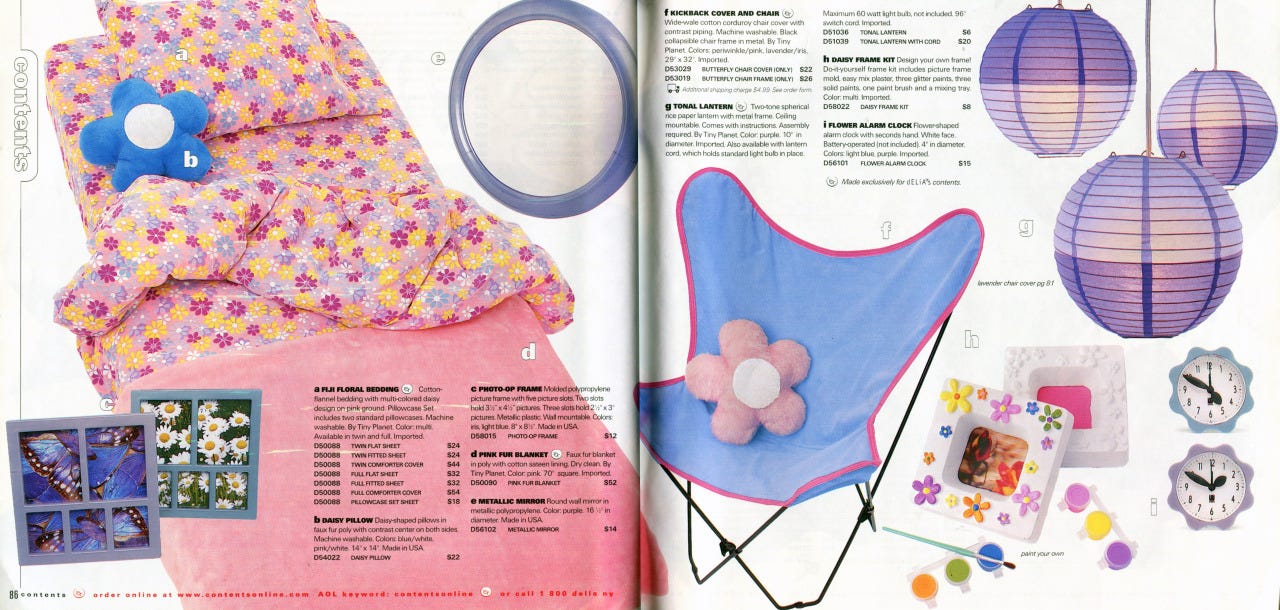
(via deliascatalogs.tumblr.com)
Handicrafts/folk-ish art stuff. See: ceramics that almost/kindaaa feel like they come from the pottery shed of a retired art school teacher in Cape Cod. Quilts that look 100 years old. Hand-painted tiles meant to look folk or Delft. Plus lots of hand-painted wall detailings that felt Scandi or Germanish in origin. (BTW, Cabana mag did a great spread on Transylvania — such amazing details.)
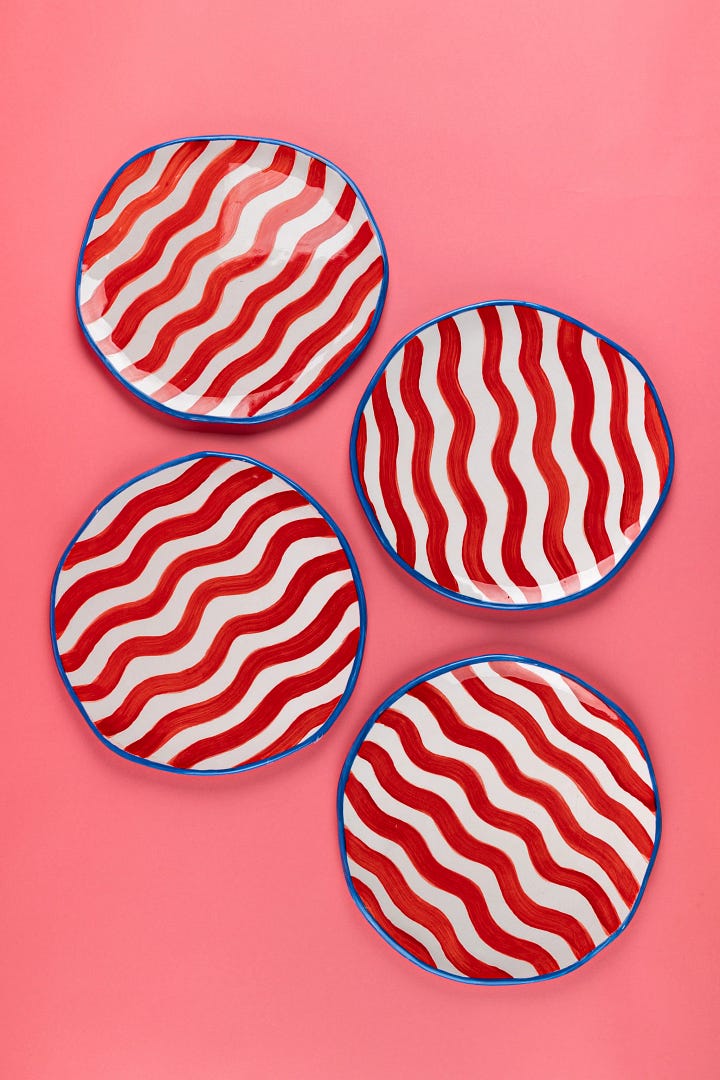
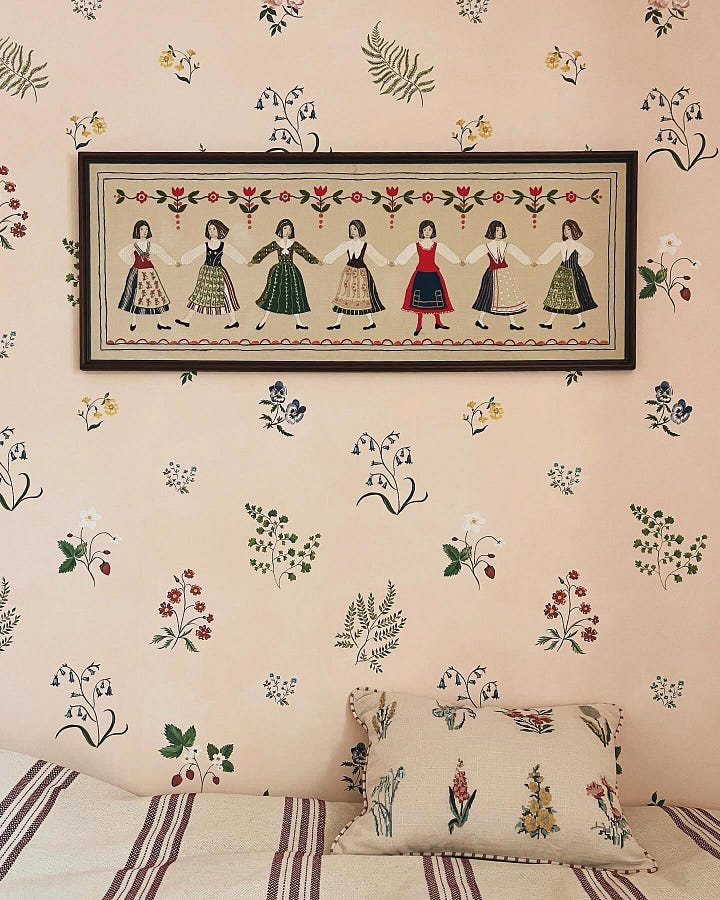
(Karavan plates; Tess Newall hand-painted wall)
Stainless steel kitchens. Broken record here, but stainless steel kitchens are not new. We associate the material with loft spaces that go big on the industrial theme, popular in certain Brooklyn locales that I just cannot with. That shrank into the shadows once all the beadbord and Shaker invaded.


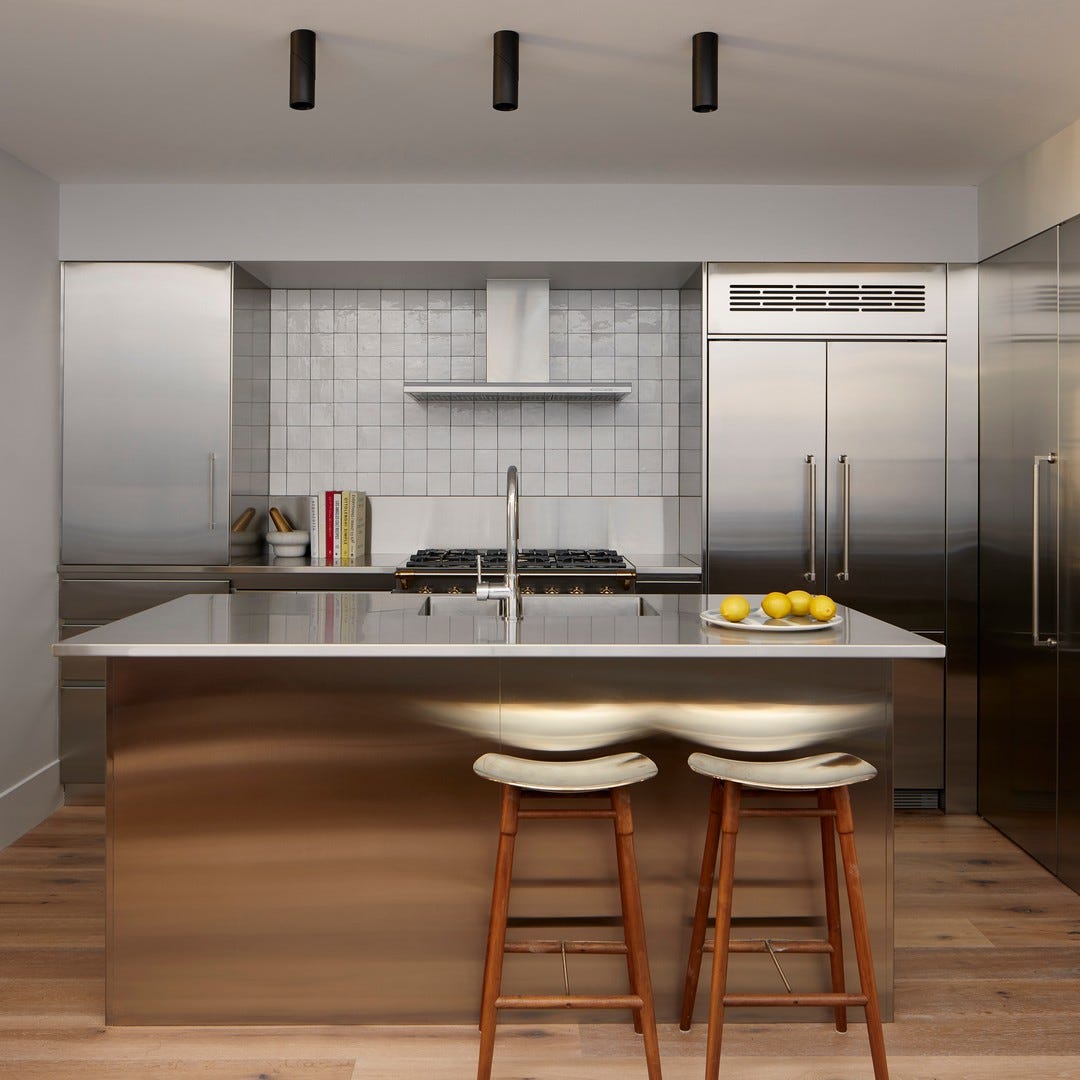
(Via Frankly Interior Design)
I had been trying for AGES to get this story for Hunker (and it’s been published somewhere recently dagnamit), but we had a hard time getting quotes from the projects I sourced, which is what happens when you’re not AD. This is definitely a “trend” that is happening in select kitchens and it certainly seems to be more present in European projects. But with everything, you may see this style translate from the elites to the masses.
Okay, well…happy end of ‘23 to ya. Like, comment, share, subscribe. But above all, have fun. Not to be super end-of-year-y to you, but next post (in 2024) will be a list of things I love, which happen to have been sourced in 2023.